About the project
Keeping the Guide alive.
The Gurnee Guide to American Caves grew out of a lifetime spent underground. Russell and Jeanne Gurnee were explorers, writers, conservationists, organizers, and internationally recognized authorities on caves developed for public visitation. This site is a modern continuation of the work they began: a free, useful guide to America's public caves, built on the same belief that caves should be explored, understood, protected, and shared responsibly.
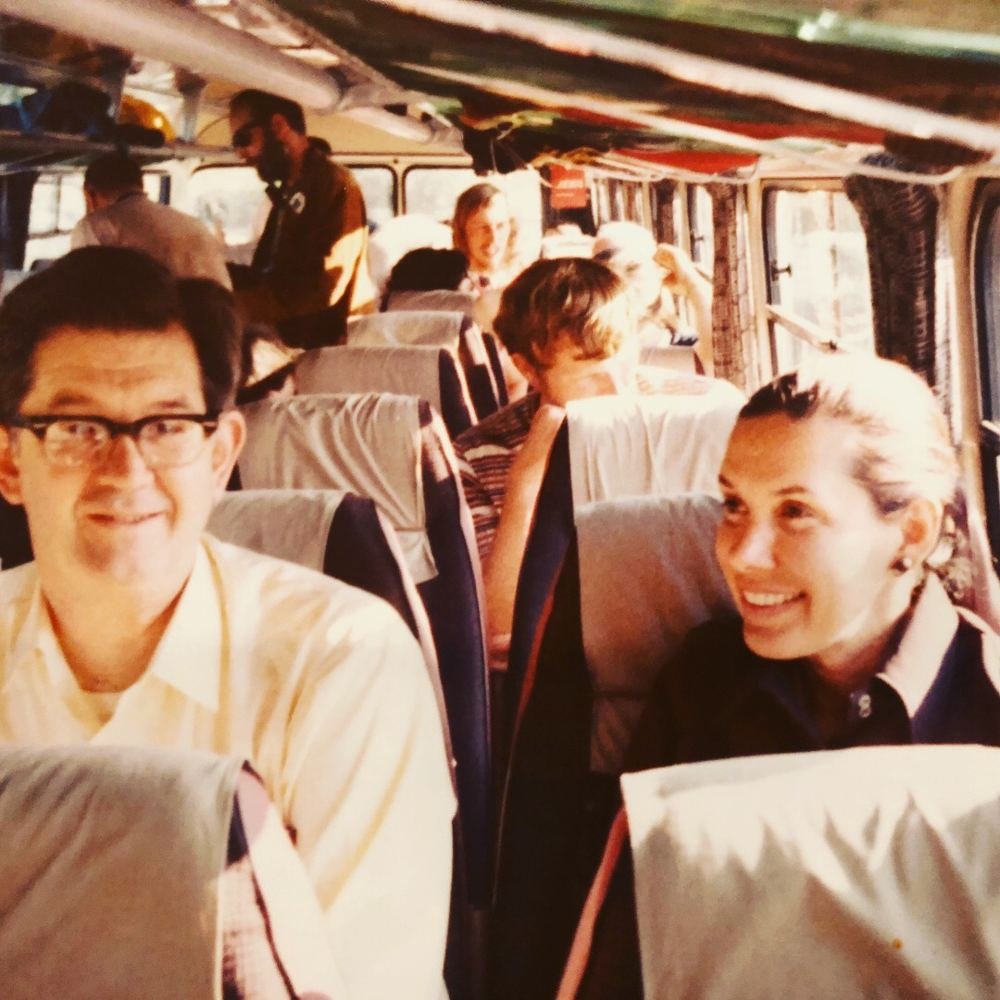
Russell & Jeanne Gurnee
A life built around caves.
Russell Hampton Gurnee (1922–1995) and Jeanne Marie Gurnee (1926–2018) formed one of the most influential husband-and-wife partnerships in twentieth-century American speleology. Their work ranged from hands-on cave exploration and surveying to conservation, publishing, organizational leadership, show-cave design, and international consulting. Across more than four decades, their names became closely associated with the idea that public access and conservation did not have to be opposing goals.
Jeanne was born in Englewood, New Jersey, in 1926. She graduated from Tenafly High School and the Katharine Gibbs School in New York and worked for an art studio in Rockefeller Plaza. She and Russell married in 1951 and made their home in Closter, New Jersey. Jeanne also became active in local civic life, serving on Closter's Board of Zoning Adjustment and as the borough's Environmental Commissioner.
By the early 1950s, the couple had become deeply involved with the then-young National Speleological Society. Their participation was never limited to weekend exploration. They helped organize cavers, build local chapters, develop conservation practices, encourage serious documentation, and establish speleology as a disciplined community combining exploration, science, history, and stewardship. Jeanne later recalled helping establish more than fifty NSS grottos.
Exploration
Río Camuy and the making of a landmark.
The work most closely associated with the Gurnees began in Puerto Rico. In the late 1950s, Russell and Jeanne became involved in the exploration of the Río Camuy cave system, an immense network of limestone caverns, sinkholes, and underground river passages in the island's northwestern karst country. Russell returned as expedition leader, and by the mid-1960s, NSS expeditions were conducting systematic exploration, mapping, photography, and development studies. Jeanne served as secretary and supply coordinator and later guest-edited the NSS's 1967 report on the proposed development of Río Camuy.
Their philosophy there was unusually forward-looking for its time. Rather than treating commercialization as inherently destructive, the Gurnees argued that carefully planned public development could create a constituency for preservation. The NSS report itself used the phrase Conservation Through Commercialization. The objective was not simply to bring tourists underground, but to design access so that a spectacular cave could be experienced without sacrificing the resource that made it valuable.
The Gurnees ultimately helped bring international attention to the system and advocated for its protection as a public resource. Their 1973 book, Discovery at the Río Camuy, documented the exploration and introduced the caves to a broad audience. The Río Camuy Cave Park was later established as one of Puerto Rico's major natural attractions.
Leadership
Building institutions above ground.
Russell's influence extended far beyond individual expeditions. He served repeatedly on the National Speleological Society's board and was president of the NSS from 1961 to 1963. In 1967, he received an NSS Certificate of Merit for the Río Camuy Cave Project. He later served as president of the National Speleological Foundation and, from 1973 to 1975, as president of The Explorers Club in New York.
Internationally, Russell served as a vice president of the International Union of Speleology and chaired the Eighth International Congress of Speleology, held in Kentucky in 1981. Colleagues later remembered his diplomacy and his ability to bring together cavers and organizations that did not always see eye to eye. His influence also extended to younger explorers, whom he encouraged, sponsored, and connected with The Explorers Club and the broader international exploration community.
Jeanne developed an equally distinguished record of leadership. She became a Fellow of the National Speleological Society, received the Society's William J. Stephenson Outstanding Service Award in 1981, and served as NSS president from 1992 to 1994. She was a longtime member of the Society of Woman Geographers, carried the Society's flag on a 1968 expedition to Guatemala, and received its Outstanding Achievement Award for her work in speleology, cave exploration, and conservation. She also served on the board of The Explorers Club and edited and published issues of The Explorers Journal.
Show caves & conservation
Making caves accessible without destroying them.
Over time, the Gurnees became internationally sought-after specialists in the development and management of show caves. Their work took them far beyond the continental United States. They were involved with Harrison's Cave in Barbados, Fountain Cavern in Anguilla, cave projects in Puerto Rico and Guatemala, and work in other karst regions around the world. Jeanne's later career included projects in Angola and consultation on Kartchner Caverns in Arizona, a project widely praised for incorporating modern conservation principles into public cave development.
The central problem was always the same: how can thousands of people visit a fragile underground environment without changing it beyond recognition? Jeanne wrote about practical answers—careful lighting, controlling algae, protecting archaeological material, limiting disturbance to bats, separating visitors from sensitive formations, and designing trails and infrastructure around the cave rather than forcing the cave to conform to the infrastructure.
That approach helped move show-cave management toward what would now be called sustainable tourism. The Gurnees did not see caves merely as attractions. They saw them as natural systems with scientific, cultural, historical, and aesthetic value, and they believed good development should make visitors more aware of those values.
The books
Turning fieldwork into a public guide.
Writing and publishing were natural extensions of the Gurnees' fieldwork. Russell co-authored Visiting American Caves with Howard N. Sloane in the 1960s and later wrote works including Discovery of Luray Caverns, Virginia. Russell and Jeanne together wrote Discovery at the Río Camuy, while Jeanne produced studies and articles on cave development, conservation, and management.
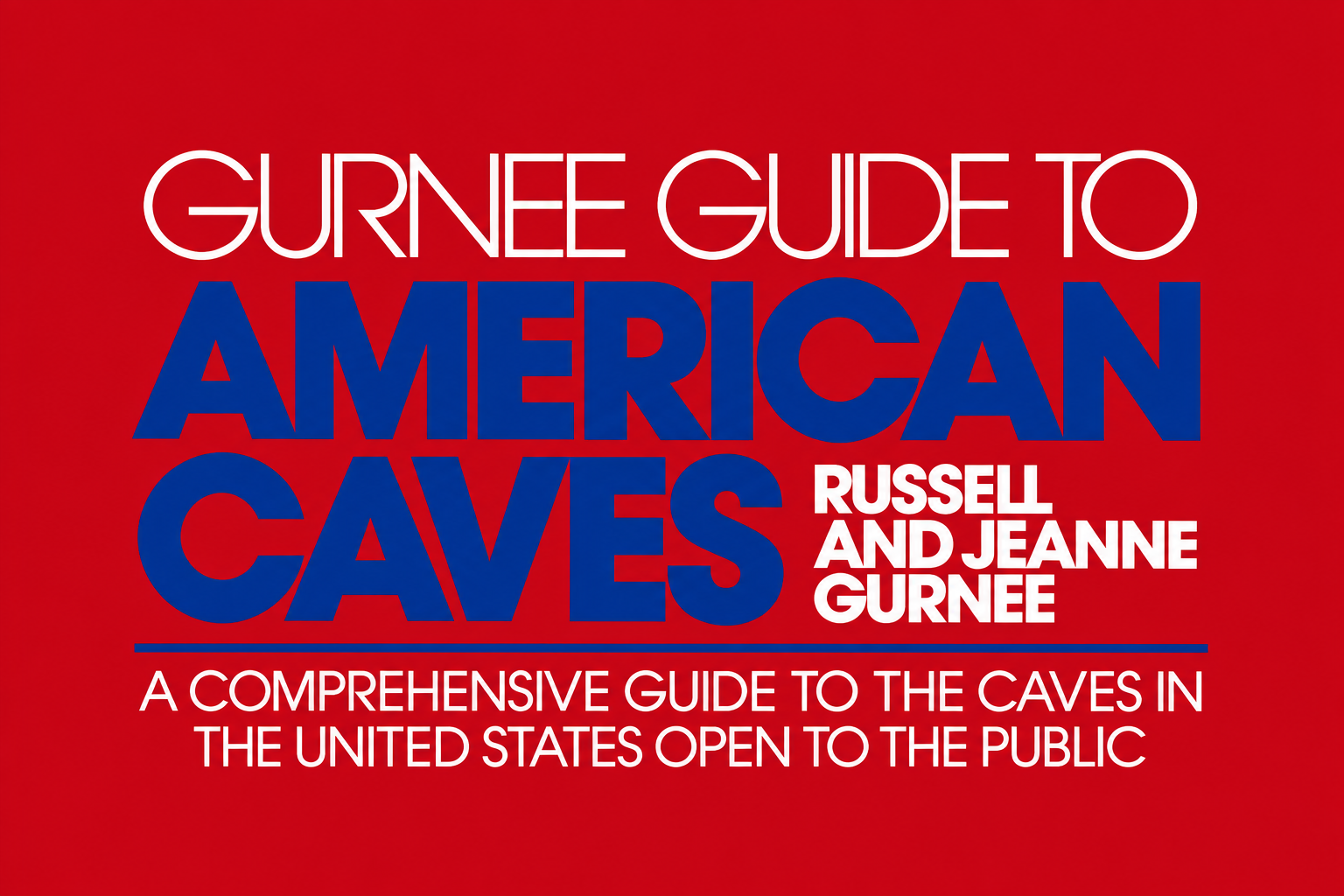
In 1980, they published the first edition of the Gurnee Guide to American Caves: A Comprehensive Guide to the Caves in the United States Open to the Public. It distilled decades of travel, correspondence, firsthand visits, and professional relationships into a practical guide for ordinary travelers. Rather than treating show caves as interchangeable roadside attractions, the Guide approached each one as a place with its own geology, history, tour experience, and character.
The Guide continued to evolve. A substantially expanded 1990 edition updated the listings and reflected another decade of travel, research, and change across America's show caves. Jeanne returned to the project once more with Gurnee Guide to American Show Caves, published in 2008. In researching and organizing that edition, she was assisted by her grandson, Luke, who had grown up traveling to caves across the United States with his grandparents. The underlying premise remained remarkably modern: reliable information, firsthand knowledge, and enough context to help a visitor understand why a cave matters.
The project today
Keeping the Guide alive.
This website carries that idea forward in a form Russell and Jeanne could not have imagined when the original Guide was published. It is intended to become a living, continuously updated resource for public caves throughout the United States—preserving the history of the Gurnee Guide while making its underlying purpose useful to a new generation of travelers, cave owners, historians, and conservationists.
Today, this project carries Russell and Jeanne's work forward with the same emphasis on usefulness, accuracy, and respect for the caves themselves. The goal is not to replace what they created, but to extend it: to bring the Guide into a digital form that can be continually researched, corrected, expanded, and kept current. The project is being developed with the hope of completing its first full digital edition in 2028, marking twenty years since Jeanne's final printed Guide.